
-
 By Derek Duckworth
- December 11, 2025
- 0 Comments
- Chat Room News
Being Ignored Online Hurts More Than You Think – What a Chat Room Study Revealed About Human Connection
Everyone’s been there: you send a message in a chat room, and nobody replies. It’s easy to brush it off, but that moment of silence actually triggers something deeper. In 2017, scientists recreated this exact situation in a controlled experiment.
- Real emotional pain
- The 2017 chat experiment
- Building friendly spaces
Here’s what they found, why it matters for modern chat culture, and how we can build friendlier online spaces where online exclusion doesn’t leave lasting emotional scars.
What the Study Was About
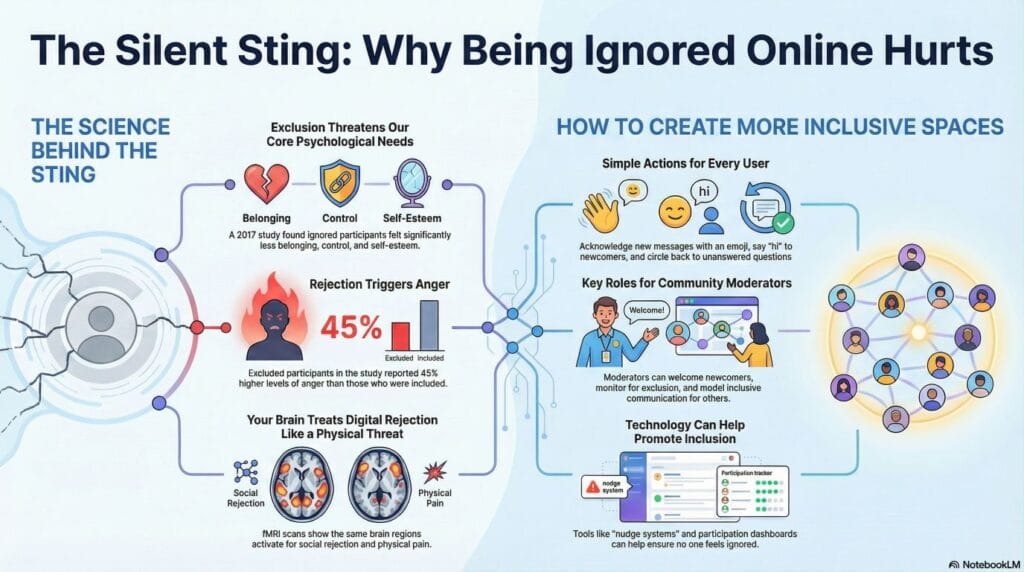
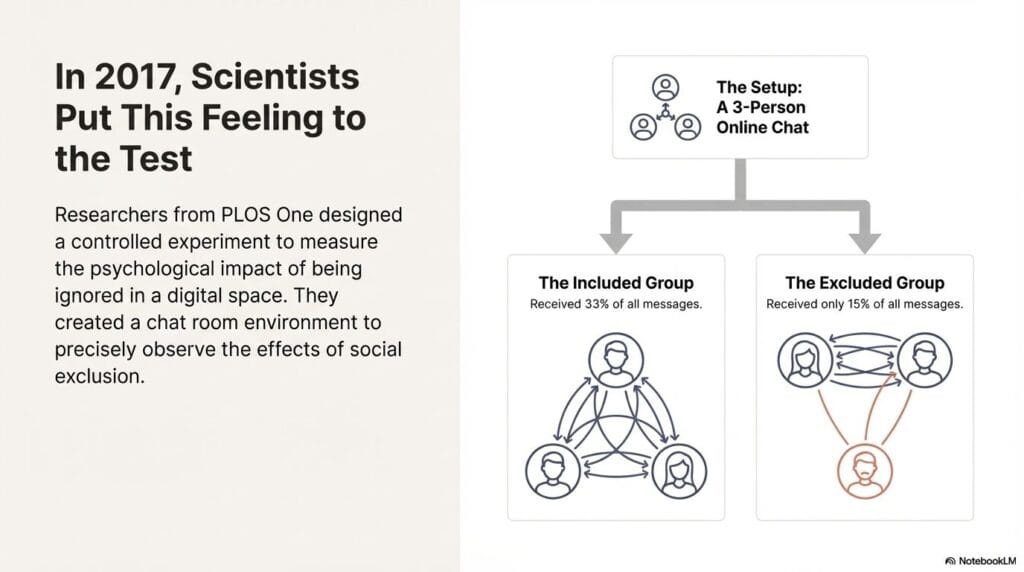
Published in PLOS One (2017), researchers designed an experiment to measure the psychological impact of being ignored in digital spaces. They built a fake online chat room with three participants. Some were included (received 33% of messages), while others were deliberately excluded (receiving only 15%).
After the chat session, participants rated their emotional responses across several dimensions: anger, sadness, belonging, control, and self-esteem. The results were striking and confirmed what many of us have felt but couldn’t quite explain.
The experimental setup comparing included vs. excluded chat participants
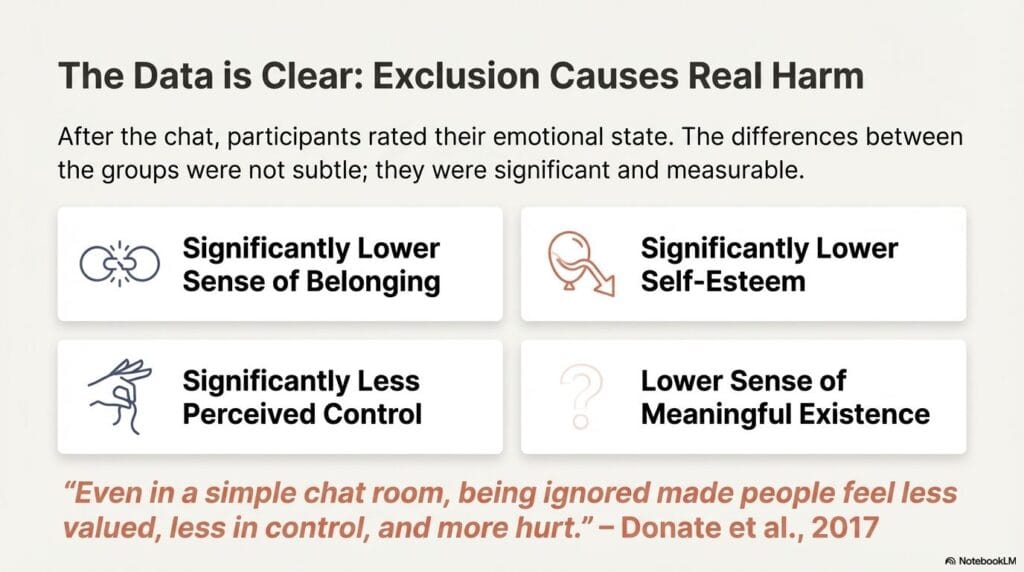
“Even in a simple chat room, being ignored made people feel less valued, less in control, and more hurt.” – Donate et al., 2017
What They Found
The research findings revealed several important insights about online exclusion:
- Ignored participants reported significantly less belonging, control, self-esteem, and meaning
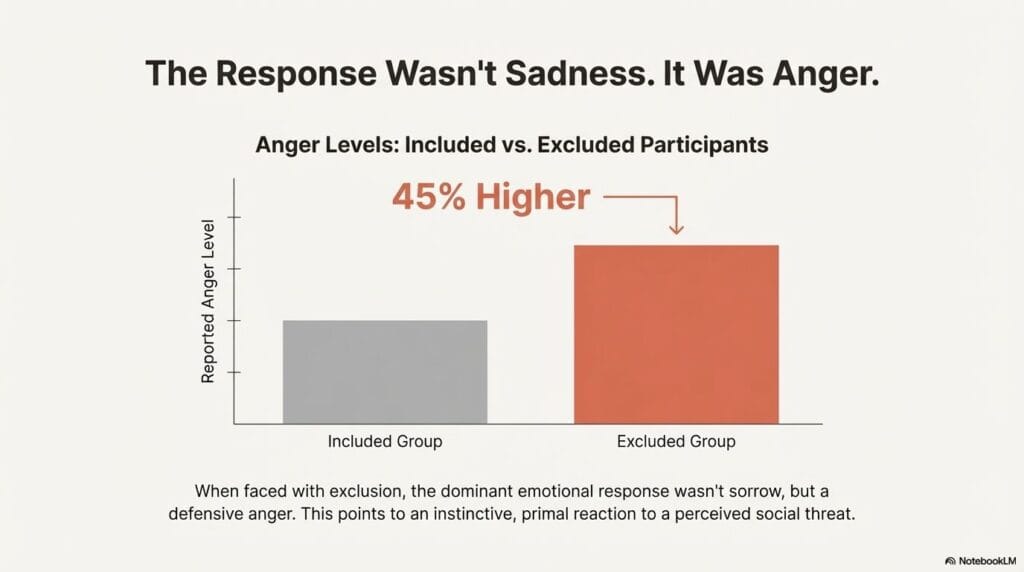
- They expressed greater anger than sadness (an instinctive defensive response)
- Many described feelings using physical pain words like “tortured” and “hurt”
- The emotional impact was real despite the interaction being virtual
Anger levels were 45% higher in excluded participants
Experience a Supportive Chat Environment
Join our inclusive chat community where everyone’s voice matters. Our moderators ensure all messages receive responses.
Why Being Ignored Online Hurts
The pain of online exclusion isn’t just “in your head” it’s rooted in our evolutionary biology. Humans evolved as social creatures who depended on group acceptance for survival. Our brains developed to treat social rejection as a threat, similar to physical danger.
This emotional response highlights a deeper issue explored in our article Do Chat Rooms Make Us More Honest or Just More Lonely?, which examines how digital communication can sometimes increase openness while still leaving people feeling isolated.
fMRI studies show overlap between brain regions processing physical pain and social rejection
When someone ignores your message in a chat room, your brain can’t distinguish this digital rejection from real-world exclusion. The same neural circuits activate, triggering genuine emotional distress.
💬 “When people ignore us online, our brain can’t tell it’s ‘just the internet.’ It interprets it as rejection.”
This explains why being “left on read” or watching a conversation continue without acknowledgment of your contribution can feel so uncomfortable. It’s not oversensitivity it’s your brain’s natural response to perceived social threat.
What It Means for Chat Room Communities
The study’s findings have significant implications for how we design and moderate online communities. Chat rooms aren’t just digital spaces they’re social environments that mirror real-world interaction patterns.
Top 4 psychological needs threatened by online exclusion
Communities with high rates of ignored messages typically experience:
Negative Outcomes
- Increased user abandonment
- Higher levels of conflict
- Reduced participation from newcomers
- Concentrated activity among few users
Positive Alternatives
- Welcoming culture for new members
- Responsive communication patterns
- Moderation that encourages inclusion
- Recognition of all contributions
The health of an online community depends largely on how included its members feel. Even brief moments of acknowledgment can make the difference between a thriving space and one that slowly empties.
Learn More About Building Inclusive Communities
Download our free guide on creating welcoming digital spaces where everyone feels valued.
How to Make Online Chat Kinder
Creating more inclusive online spaces doesn’t require complex technology it starts with simple human behaviors that acknowledge others’ presence and contributions.
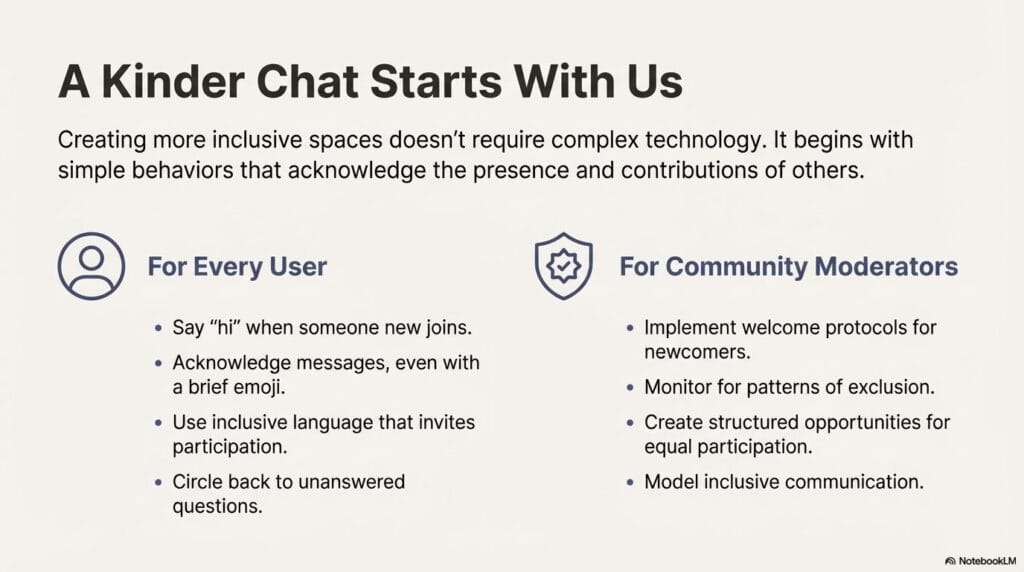
Simple greetings can significantly reduce feelings of exclusion
For Chat Users
- Say “hi” when someone new joins the conversation
- Acknowledge messages, even with a brief emoji response
- Use inclusive language that invites participation
- Circle back to unanswered questions when possible
- Be mindful of conversation monopolization
For Community Moderators
- Implement welcome protocols for newcomers
- Monitor for patterns of exclusion or ignored messages
- Create structured opportunities for equal participation
- Model inclusive communication behaviors
- Provide feedback channels for those feeling excluded
Effective moderation can help redirect attention to overlooked contributions
From Research to Real Life
The experiment might have taken place in a lab, but its message is profoundly human: inclusion matters. Every reply, greeting, or small interaction helps others feel valued even in an online chat.
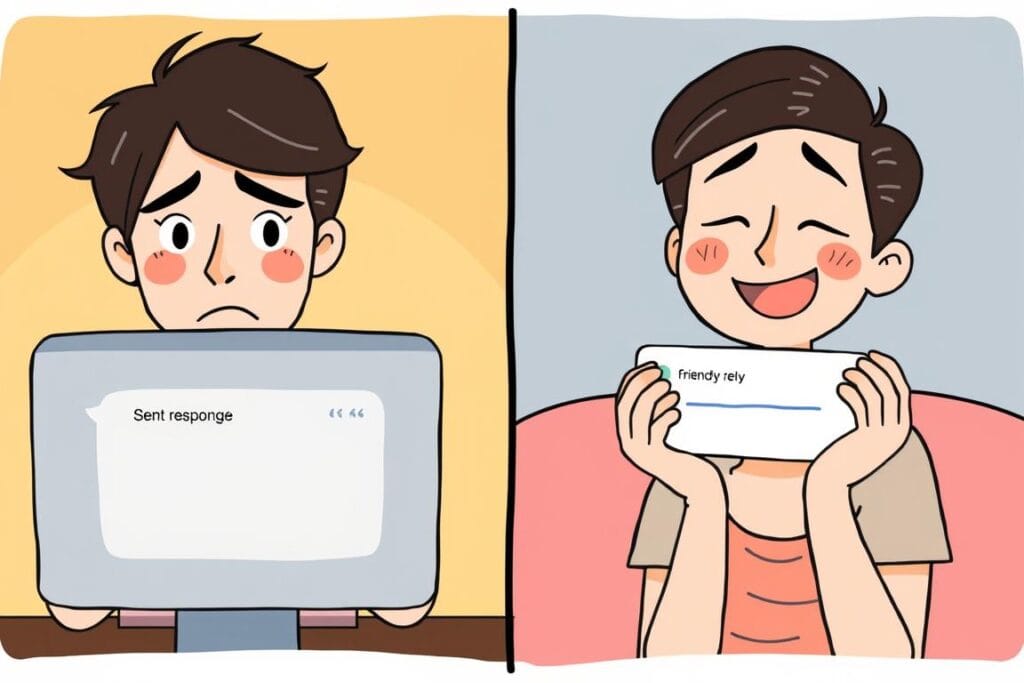
The emotional impact of receiving acknowledgment after feeling excluded
We’ve built our chat community around these principles, creating spaces where everyone’s voice matters and no one feels the sting of online exclusion. Our moderators are trained to notice patterns of exclusion and gently redirect conversations to include everyone.
Our users report significantly higher satisfaction and lower feelings of exclusion compared to other online communities. We’ve created a space where the research findings on online exclusion have been translated into practical, everyday interactions.
Moments like this are why many communities introduce clear chat room rules and online safety guidelines, helping ensure new users aren’t ignored or pushed out of conversations.
Creating Spaces Where Everyone Belongs
Online words might be typed in seconds, but they leave real emotional footprints. Whether you’re chatting with friends, strangers, or a full room, don’t underestimate how far a quick “hey, how are you?” can go in preventing the pain of online exclusion.
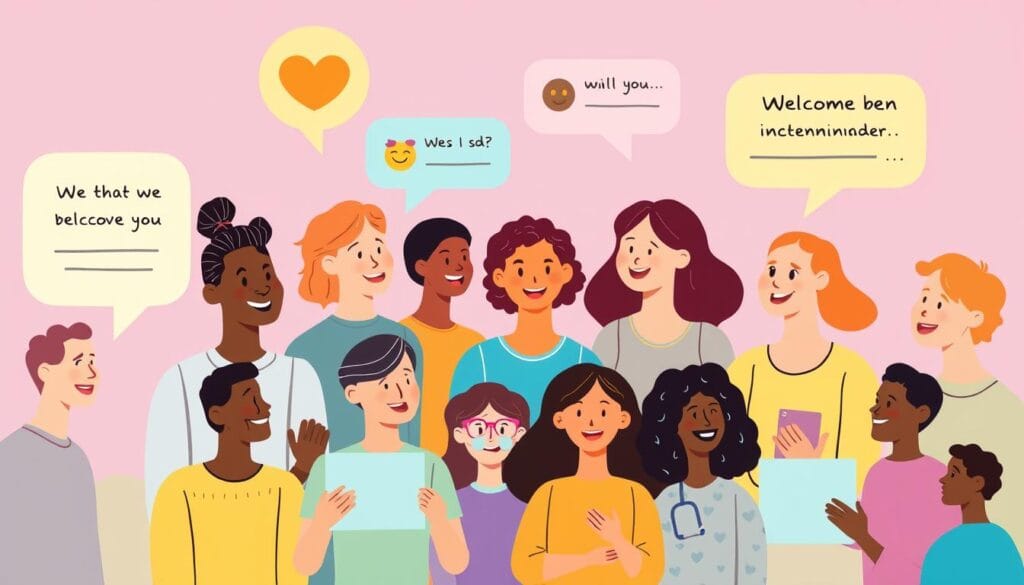
Inclusive online communities create spaces where everyone feels valued
The science is clear: online exclusion hurts in very real ways. But the solution is within our reach. By making small changes to how we communicate online, we can create digital spaces that support our fundamental human need for connection and belonging.
Related Links
Who Uses Chat Rooms in 2026? Age, Gender and Time Spent
https://www.worldofchat.co.uk/chat-room-users-2026/
How to Use a Chat Room (Simple Guide for Beginners)
https://www.worldofchat.co.uk/how-to-use-a-chat-room-comprehensive-guide/
Chat Room Popularity Over Time
https://www.worldofchat.co.uk/chat-room-popularity-over-time/
Senior Chat Rooms – Friendly Chat for Over 50s
https://www.worldofchat.co.uk/senior-chat-rooms/
Main Chat Room – Join the Conversation
https://www.worldofchat.co.uk/main-chat-room/
Join Our Inclusive Chat Community Today
Experience a chat environment where everyone’s voice matters and no one feels the sting of exclusion.
