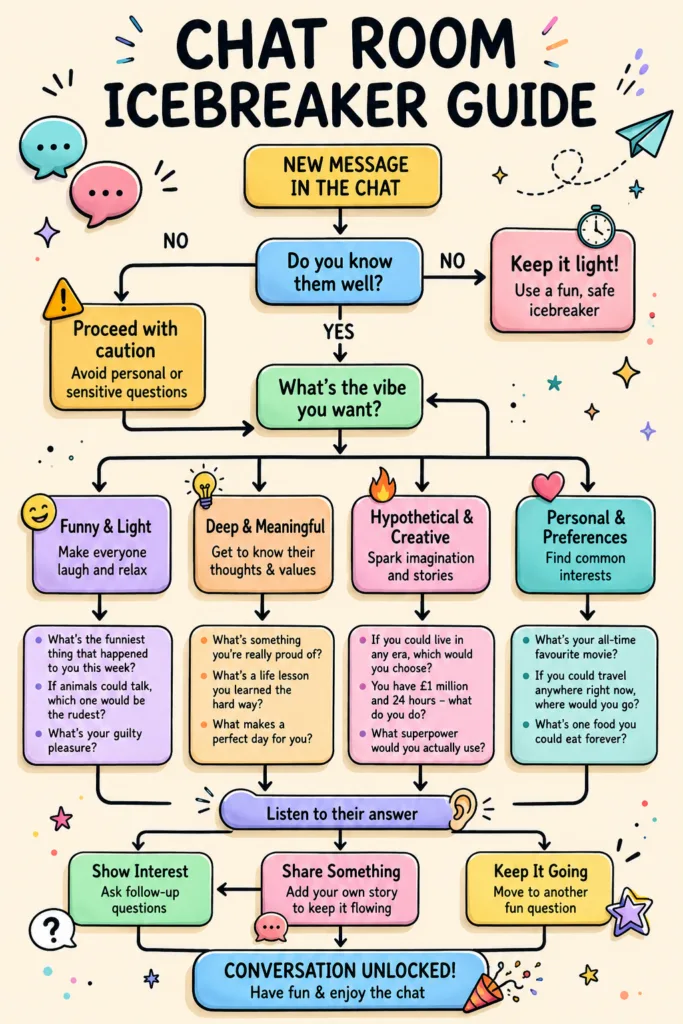

Chat Room Icebreakers: Fun Questions to Ask Friends

Starting a chat online can feel awkward when the screen is blank. I use chat room icebreakers as simple prompts to warm up a group and start a genuine conversation.

Interactive chat room icebreaker generator with funny, deep and playful questions. Includes practical prompts and tips to help start conversations, spark engagement and build genuine connections online.


Chat Room Icebreakers: Fun and Interesting Questions to Ask Friends

Quick prompts and gentle questions help turn quiet chats into friendly exchanges.

Icebreaker questions are an easy way to move from silence to connection. The right question can spark a laugh, reveal something surprising about a person, or open the door to a longer conversation.

These starters are intended to make socialising online more comfortable and enjoyable for everyone involved. They work well whether you are meeting new people, catching up with friends or helping a team bond.

I enjoy seeing how a single question can bring out new stories or memories — mundane evenings often become memorable with a little curiosity and humour.

I have grouped prompts by mood so you can pick what suits your group: light and playful, nostalgic, hypothetical or deeper personality prompts. Use the sections below to choose a style that fits your session and try one or two questions to get things going.

Light-Hearted Questions to Get the Conversation Started

Light-hearted prompts are ideal for opening a chat because they lower everyone’s guard and invite easy sharing. Use these when people are meeting for the first time, catching up after a long gap, or when the group needs a quick mood boost.

Questions About Preferences and Favourites

Asking about likes and favourites is a reliable way to find common ground. A short, friendly question can lead to a longer conversation and reveal shared interests.

Here are the examples already provided in the original article; use them as a starting point and follow up with one quick probe (for example, “What makes that your favourite?”) to keep the exchange flowing:

  • What’s your favourite music and why?
  • What’s the best book you’ve read?
  • If you could have a superpower, what would it be?

How to follow up: after an answer, try a light follow-up such as “When did you first get into that?” or “Which song/author would you recommend?” These short prompts help move from a list-style reply to a short story or recommendation.

Quirky 'Would You Prefer' Scenarios

‘Would you prefer’ questions are fun because they force a choice and invite a reason. Use them for playful debate or to get people laughing. Keep the options simple and relatable so everyone can join in.

Table summary: two quick option pairs to spark discussion and friendly argument.

Simple ‘Would You Prefer’ pairs

Would You Prefer…Option 1Option 2
TravelAnywhere for freeAnywhere with a personal tour guide
FoodEat any food and never gain weightBe able to cook any dish perfectly

How to use these: pose the pair to the group and invite short reasons; if someone’s answer is intriguing, ask “Why that one?” to encourage a little story or explanation.

Video note: the original block included this link —

— check the clip before embedding; otherwise, describe it briefly so readers know what to expect.

Nostalgic Questions About Childhood

Nostalgia prompts create warmth and shared memories. They are especially good for groups where people may already know one another a little, or when you want to build camaraderie quickly.

Original examples (use as provided and invite a short anecdote after an answer):

  1. What was your favourite toy as a child?
  2. Did you have a favourite cartoon or TV show?
  3. What’s one thing you loved doing as a child that you also enjoy now?

Follow-up ideas: ask “What made that toy/show special?” or “When was the last time you did that activity?” These simple prompts convert a one-line reply into a warm, personal exchange.

Accessibility and tone notes: keep language inclusive, avoid assumptions about upbringing, and prefer open prompts that let people share as much or as little as they like.

Chat Room Icebreakers: Fun and Interesting Questions to Ask Friends

To create a lively chat room you need well-chosen prompts. The right icebreaker questions encourage people to share dreams, opinions and little stories, so conversations move beyond surface-level small talk.

Creative Hypothetical Questions

When to use: try hypothetical prompts once the group is relaxed — they invite imagination and reveal priorities without getting personal.

Why they work: hypothetical scenarios (for example, imagining a sudden windfall or a day with a superpower) reveal what someone values and how they would spend their time.

How to follow up: after an answer, ask a short follow-up such as “Why would you choose that?” or “What’s the first thing you’d do?” to prompt a quick story or detail.

Sample prompts in the original: consider them starters to spark travel, ambition and world-building chat.

  • If you had a million pounds, what would you do?
  • Who would you switch lives with for a day?
  • If you could travel anywhere instantly, where would you go?

Questions That Reveal Personality

When to use: use personality prompts once people are comfortable sharing a little more; they work well for deepening bonds with friends or colleagues on a team.

Why they work: asking about strengths, proud moments or how someone handles difficulty surfaces values and shows what matters to a person in life or work.

How to follow up: encourage reflection with short probes like “How did you learn that skill?” or “When was the last time that mattered to you?” These follow-ups keep the tone supportive while inviting narrative.

Examples from the original list: use them to open honest, respectful conversation.

  1. What are you most proud of?
  2. What are you working on improving?
  3. What’s your biggest strength and how do you use it?

Adventure and Dream-Based Questions

When to use: deploy adventure prompts for Friday nights, team socials or any time you want the group to dream together — they spark excitement and planning chat.

Why they work: talking about adventures and bucket-list items surfaces passions and can lead to shared plans or future activities.

How to follow up: after someone shares a dream, ask “When could you make that happen?” or “Who would you take with you?” to move from imagination to possibility.

Dream and adventure prompts often lead to stories about trips, skills people want to learn, or the one thing on a personal bucket list.

Original examples to spark adventure chat:

  • If you could plan a dream vacation, where would you go and what would you do?
  • What’s the most spontaneous thing you’ve ever done?
  • If you could achieve any goal in the next year, what would it be?

Accessibility and structure tips: add internal anchors (for example, #hypothetical, #personality, #adventure) so readers can jump straight to a category. Keep questions concise, use inclusive language, and offer optional follow-ups to invite short stories rather than long confessions.

Conclusion

Using well-chosen conversation starters can make online chats with friends and teams more enjoyable and memorable. Icebreaker questions create a friendly space where people are more likely to open up, share a story or suggest a future activity.

Creative and thoughtful prompts — whether light-hearted or deeper — help conversations move beyond small talk and can strengthen connections over time. Try rotating the types of questions you use so interactions stay fresh: one session might favour playful, would-you-prefer prompts; another can focus on dreams, skills or proud moments.

Practical tip: start a session by asking each person one short question (for example, a favourite song or the one thing on their bucket list). That quick round gives everyone a voice and often leads to natural follow-ups and mini-stories.

See Also

If you want to learn more about the psychology of chat rooms or want to learn some tips and ways to start a conversation with someone you can do so with these links

FAQ

Why are icebreakers effective for digital communication?

Starting chats on platforms such as WhatsApp, Slack or Discord can feel stiff; icebreakers reduce social anxiety and help people feel comfortable and connected.

How do I use 'Would You Prefer' questions to spark engagement?

How should I introduce nostalgic topics?

Can hypothetical questions lead to deeper connections?

How do I ask personality-revealing questions without awkwardness?

What are some adventure-based questions for a social evening?

How do I keep online interactions fresh?

Comment

Your email address will not be published. Required fields are marked *

Depression and Anxiety Chat Rooms – You’re Not Alone

February 17, 2026

Free Access • No Registration Depression and Anxiety Chat Rooms – You’re Not Alone.

  • No React!
  • Comment 0

Chat Room Popularity Over Time: The Rise, Peak, and Decline of Online Chat Platforms

January 7, 2026

Chat Room Popularity Over Time: The Rise, Peak, and Decline of Online Chat Platforms

  • No React!
  • Comment 0

Liverpool Chat Rooms – Connect with Scousers Worldwide

December 28, 2025

Liverpool Chat Rooms – Connect with Scousers Worldwide Join our vibrant online community where

  • No React!
  • Comment 0