
-
 By Derek Duckworth
- January 13, 2026
- 0 Comments
- Chat Room News
Chat Room Addiction: Prevalence, Recognition, and Recovery Strategies
Chat room addiction refers to a compulsive, excessive use of online chat platforms and virtual communities to the point that it disrupts daily life. It can affect all age groups, from adolescents who spend hours on social messaging to adults absorbed in forums or group chats. Researchers often consider it a subtype of Internet addiction, sometimes called cyber-relationship addiction, where individuals become over-involved in online social interactions. People suffering from this addiction may feel preoccupied with online conversations, unable to cut back their chat time, and distressed when offline.

Chat room addiction can lead to physical isolation despite constant digital connection
Prevalence and Statistics
Excessive online chatting is increasingly common in our digital era. Recent data suggest a significant minority of the population engages in Internet use at addictive levels. A 2020 global meta-analysis found roughly 7% of the world’s population shows signs of Internet addiction.
In the UK, digital overuse is a growing concern: approximately 1 in 8 British adults (12.5%) suffer from some form of behavioural addiction, including compulsive internet or social media use. Social media addiction specifically may affect around 4.1% of the UK population, with young people showing the highest rates.
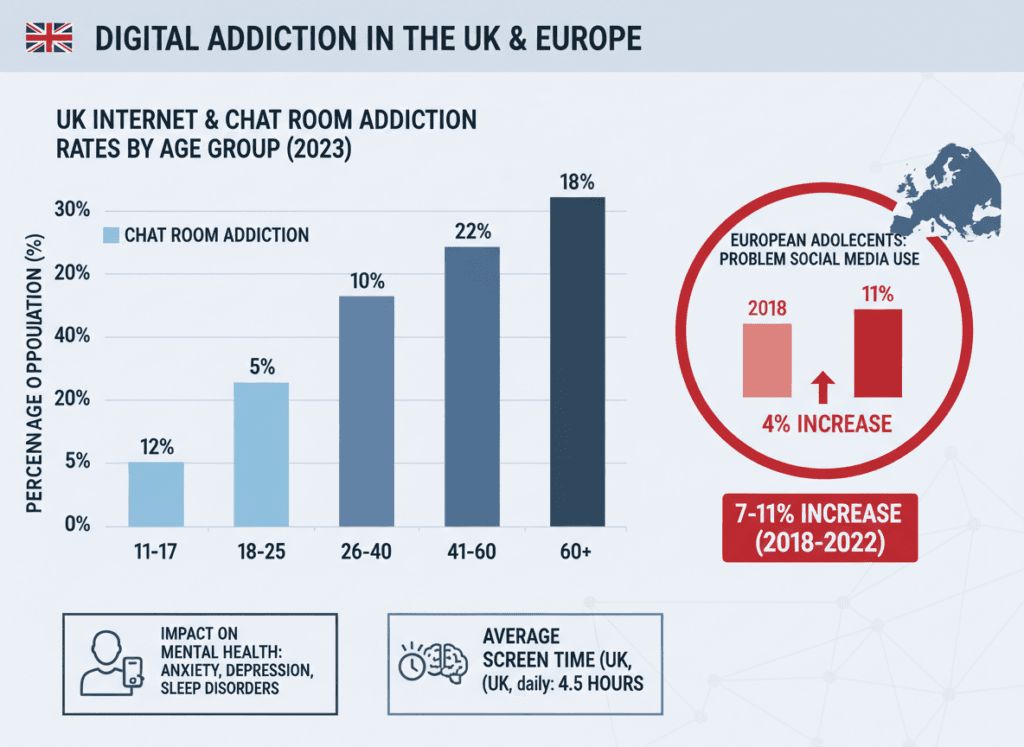
Problematic social media use among European adolescents jumped from 7% in 2018 to 11% in 2022
Alarmingly, nearly half of British teenagers (48% of 16–18 year-olds in a recent Cambridge study) feel addicted to social media. While feeling addicted is not a formal diagnosis, it signals a perceived loss of control. Notably, younger people are most at risk: one study found those under 30 had significantly higher odds of Internet addiction, whereas participants over 30 were much less likely to be addicted.
The impact of chat or Internet addiction shows up in daily life statistics. In an Ofcom survey of UK internet users, one-third had attempted a “digital detox” (about 15 million people) in the past year to curb their online obsession. Around 40% of UK adults feel they spend too much time online, and nearly 50% have neglected sleep or household chores due to excessive internet use. Among teenagers, 60% admitted neglecting schoolwork because they were glued to online activities.
Is "Chat Room Addiction" Recognized as an Addiction?
The concept of addiction has broadened in recent years to include certain behavioral addictions (addictive behaviors without a substance). Gambling disorder is officially recognized, and Gaming disorder (excessive video gaming) was added by the World Health Organization to the International Classification of Diseases (ICD-11) in 2019.
However, “chat room addiction” or general internet addiction is not yet an official diagnosis in the main medical manuals. The American Psychiatric Association’s DSM-5 (5th edition) considered “Internet Gaming Disorder” as a condition for further study, but did not formally include internet/chat addiction as a discrete disorder, citing the need for more research. Similarly, the WHO’s ICD-11 does not list general internet or social media addiction (only the gaming subset).

Mental health professionals increasingly recognize chat room addiction despite its absence from official diagnostic manuals
That said, the mental health community increasingly acknowledges chat and internet addictions as real problems. Many experts classify them under “problematic Internet use” or as a type of behavioral addiction akin to pathological gambling. Mental health publications describe how compulsive online socializing can lead to impairment in work, school, or relationships, which is characteristic of addiction-like disorders.
In fact, back in the late 1990s, pioneering researcher Dr. Kimberly Young found that 90% of pathological Internet users’ “addictive” activities were in two-way communications (chat rooms, MUDs, email, etc.) – highlighting how interactive chat can be as compelling as drugs or gambling for some individuals.
Clinical views are evolving: psychiatrists debate whether these digital addictions are distinct problems or symptoms of underlying issues like anxiety, depression, or loneliness. Some prefer terms like “problematic interactive media use” over “addiction” to avoid stigma and acknowledge that complete abstinence from the Internet is neither practical nor necessary in modern life.
Still, the consensus is that compulsive online behavior (including chat room overuse) can be very damaging and merits intervention. The UK’s NHS has taken note – in 2018 it launched a specialist Internet addiction clinic in London, initially to treat gaming disorder but with plans to expand to other online addictions such as cybersex or online social addiction. This clinic, part of the National Centre for Behavioural Addictions, is the first of its kind and signals growing official recognition of the issue in the UK.
How Do People Become Addicted to Chat Sites?
There are thousands of reasons why people engage in online chatting, from stress and loneliness to boredom and anxiety. Whether for socialising, dating, handling difficult conversations, dealing with insomnia, or overcoming fears, the common denominator isn’t necessarily why individuals turn to chat rooms, but what they learn once they do. Online chatting teaches you that these platforms can help alleviate whatever issue you’re struggling with. The more you practice this, the more ingrained it becomes.

Chat rooms trigger dopamine release in the brain’s reward system, reinforcing addictive behavior
Online chat addiction doesn’t happen overnight. It’s a practised and learned behaviour. You begin to use chat sites as a crutch, teaching your brain that what you’re doing online makes the situation feel easier or a part of life more bearable. This usually happens because people lack alternative means to cope with their challenges.
An Example
For example, let us consider Dave, who returns home from work to an empty house where the loneliness is unbearable. Dave starts looking for a distraction, so he logs online and starts chatting. This gives him a bit of a buzz and he no longer feels lonely. If you do this now and again, it’s fine and not a big deal. However, what if this becomes a daily habit and then becomes the only way Dave can manage his feelings? The more you repeat this behaviour, the more your brain learns that there is something to look forward to, getting a hit of dopamine when you get home to cope with it. Dave finds relief in an online chatting community, reinforcing his addiction to chat rooms.
Bear in mind, Dave has not solved his problem; he has just found a way to cope with it and mask his feelings. By repeating this over and over, you are creating a powerful habit in his brain. The longer the feelings are not addressed, the deeper they become, and the more he will feel drawn to go online and chat. That is how chatting addiction starts.
You may try not to turn on your laptop to stop the habit, but you become more drawn towards your computers or devices to get that hit. You may even start to spend more time than you intended in chat, and you could even suffer withdrawal symptoms, which may be physical, from this virtual reality world.
Real-life stories
Here is a story from my life. When I was younger, I used to play football with this guy. He was an average-looking guy, and every time I saw him, he had a new girlfriend. However, I never met them. He had photos of them, and they were always stunning women. I thought, “Wow, how is he meeting these women? It’s a new one each week.”
Later, while watching Catfish one night, it dawned on me that he wasn’t meeting them; he told me he met them online after I asked him one night. He found it very addictive to meet new girls like this. I can tell you now that those women were not real; they were just women he met online who sent him a fake hot girl picture. This guy was wasting his life chasing these women.
This is what chat addiction can do to you. You can be chasing fake women and catfish online all your life. There are thousands of them out there, but there is a real world out there. Try not to waste it online in addict chat rooms. By all means, use them and enjoy them, but don’t let them take over your life. As I assure you, there are lots of real-life men or women who would love to get to know the real you.
Personal Accounts and Impact
Real-life experiences illustrate how chat room addiction can develop and affect individuals’ well-being. One young woman described how, at one point, she would come home from college and go straight into an online chat room, staying logged in from 5 p.m. until midnight every day. “I was in the depths of my chat room addiction – for me it was like attending a social event,” she said, noting how regular participation and familiar faces made the virtual room as compelling as real life. Over just a few weeks, this habit consumed her evenings, displacing offline activities.

Late-night chat sessions often lead to sleep deprivation, affecting physical and mental health
Others have shared similar stories. In the same interview study, another participant admitted that late-night messaging sessions were interfering with his sleep: “Sometimes MSN will get me into a deep conversation which lasts till the early hours – NOT good as I get up at 4:30am,” he reported. He also faced friction in his offline life due to his online immersion; friends who didn’t understand his needs got annoyed, and at work he even received warnings for using electronic communication (text and email) excessively instead of in-person interaction.
These testimonials show the negative consequences of uncontrolled chat use: poor sleep, academic or job performance declines, and strain on relationships. People often describe a cycle of compulsion – an urge to check messages or chat that overrides other responsibilities – followed by withdrawal symptoms like irritability or anxiety when they try to cut back.
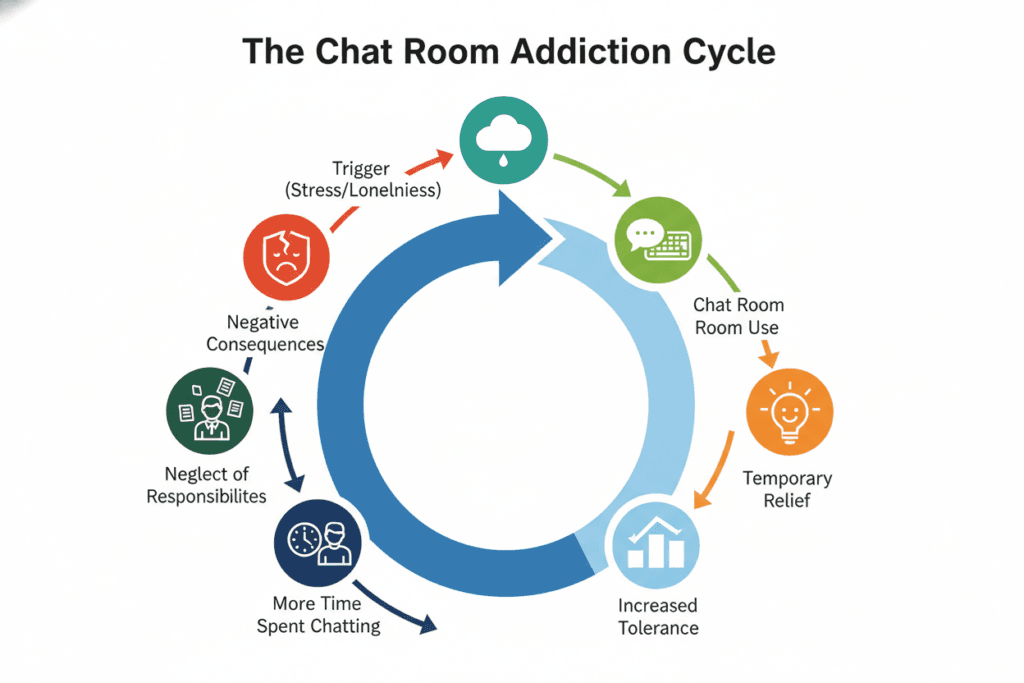
The cycle of chat room addiction: triggers, relief, escalation, and consequences
In online forums and support groups, individuals have spoken of feeling “addicted to the buzz” of constant social connection, or using chat rooms as an escape from real-life problems only to find themselves isolated behind a screen. A common theme is that what starts as a fun, social activity can spiral into an unhealthy dependence that “consumes your life”. As one former chat addict put it, she eventually had to step back when she realized the online world was replacing real life interactions and happiness.
It’s worth noting that chat room addiction can co-occur with other issues. For some, it goes hand-in-hand with depression, social anxiety, or autism spectrum disorder, where online communication feels safer or more controllable than face-to-face contact. While the chat room provides temporary relief or companionship, over-reliance can worsen mental health in the long run (by reinforcing avoidance of real-world challenges or by exposing the person to online conflicts). The personal stories and case reports in mental health literature highlight that this addiction is real and painful to those experiencing it – but, importantly, recovery is possible with the right support.
Recovery and Support Strategies (UK-Focused)
Overcoming chat room or Internet addiction is challenging but achievable. Traditionally, therapy – especially Cognitive Behavioral Therapy (CBT) – is considered an effective treatment for Internet addictions, as it helps individuals change problematic thought patterns and regain control over their behavior. However, therapy is not the only path. Below are several UK-based alternatives and complementary strategies for addressing chat room addiction:
Peer Support Groups
Connecting with others who have overcome or are struggling with similar issues can be incredibly helpful. Internet and Technology Addicts Anonymous (ITAA) is a worldwide 12-step fellowship that offers free support meetings every day, including online and phone meetings accessible from the UK. ITAA welcomes members of all ages and all types of digital addictions (social media, messaging, gaming, etc.), providing a community of peer support in multiple languages.
Get Support Without Judgment
You are not alone. Confidential support and recovery resources are available if online chat is taking over your life.
In these meetings, people share experiences and coping strategies, much like Alcoholics Anonymous but for digital addiction. The group support and accountability can help break the isolation of chat addiction. UK residents can join online or look for any local ITAA chapters or other tech-addiction support groups.
Helplines and Charities
In the UK, there are confidential helplines for those facing behavioral addictions. Notably, the new NHS Centre for Internet Disorders in London has set up a free helpline for Internet addiction concerns. Individuals (or their families) can call to get guidance, resources, or a referral for further help.

UK helplines provide confidential support for those struggling with chat room addiction
While this NHS service is pioneering, more general mental health helplines can also support someone in distress due to chat addiction. For example, the Samaritans (116 123) offer 24/7 emotional support for anyone feeling overwhelmed (not specific to internet use, but useful if the addiction is causing mental health crises). The mental health charity Mind advises that if you feel you might have an Internet addiction affecting your well-being, you should consider reaching out to a GP (family doctor) for help and advice.
A GP can assess the situation, provide initial counseling, or refer to a specialist service (some areas may have psychologists familiar with digital overuse). Additionally, resources like YoungMinds (for youth) or SMART Recovery (which has groups for behavioral addictions) can be useful. While private clinics (like the Priory or specialist tech addiction rehabs) exist, the focus here is on accessible alternatives: free helplines, NHS resources, and charities which often have online forums or support materials on digital well-being.
Self-Help CBT Tools
Many techniques from cognitive-behavioral therapy can be self-applied to manage compulsive internet use. The NHS’s Every Mind Matters platform provides free online self-help CBT guides and interactive tools to cope with negative thought patterns, manage anxiety, and build healthier habits.

Self-help CBT tools can help identify triggers and develop healthier online habits
For example, CBT techniques like reframing unhelpful thoughts can challenge the beliefs that drive one to seek chat room validation constantly (e.g. “I must stay online or I’ll miss out”). Another technique is problem solving: identifying what triggers excessive chat use (boredom, stress, loneliness) and finding alternative solutions for those triggers (like taking a walk to cope with stress, rather than logging into a chat).
Use Chat Rooms in a Healthier Way
Chat does not have to be all or nothing. Learn how to enjoy online conversations without losing control.
There are also mobile apps (some NHS-endorsed) that help with managing screen time and mental health; for instance, apps that send reminders to take breaks, practice mindfulness, or log off at set times. Using such digital well-being apps can turn technology into part of the solution. Additionally, guided CBT workbooks on internet addiction (available through bookstores or PDF online) can walk individuals through exercises to regain control. These self-help routes are good for those who prefer privacy or cannot access a therapist immediately. They instill coping skills and reinforce the idea that you can change your online behavior by changing your thinking and routines.
Digital Well-Being Strategies
Adopting practical tech-life balance habits is key to recovery. Experts recommend several strategies for healthier Internet use:
Scheduled "Offline" Times
Setting aside certain hours of the day or days of the week to be internet-free. Many recovering chat addicts start with small goals, like no phone or chat after 10 p.m., or a 48-hour digital detox on a weekend. In fact, digital detoxing is becoming common – over one-third of UK internet users have purposely taken a break from the internet to recalibrate their usage. Users often report feeling more productive and liberated after these breaks.
Disable Unnecessary Notifications
Constant pings and alerts from chat apps are designed to grab your attention. Turning off social media and chat notifications (or using “Do Not Disturb” modes) can reduce the urge to check messages obsessively. Simply silencing notifications has been shown to help curb addictive social media use, according to tech experts. You can still manually check messages at set intervals, but you won’t be endlessly lured by every buzz.
Screen Time Monitors and Limits
Using built-in phone features (like Apple’s Screen Time or Android’s Digital Wellbeing) or third-party apps to set daily time limits on chat applications. These tools can alert you or even lock you out after, say, 1 hour on a chat app per day. It creates a soft barrier that makes you mindful of usage. Some people also keep a usage diary – logging when and why they go to chat – to identify patterns and cut down impulsive logins.
Replace and Redirect
It helps to replace the habit with something healthier. For example, if loneliness or boredom triggers a chat room binge, have a list of alternative activities: call a friend or family member on the phone, meet someone in person if possible, or engage in an offline hobby (reading, exercise, etc.). Developing offline social connections is crucial, since chat addiction often fills a social void. Therapists suggest scheduling real-world interactions to fulfill the need for connection in a healthier way.

Replacing online chat time with meaningful offline activities is crucial for recovery
Environmental Changes: Simple changes like not using your phone or laptop in bed, or keeping devices out of the bedroom at night, can break the association of “constant availability.” If late-night chatting is an issue, establishing a rule like “devices stay in the living room after 10 PM” can help restore normal sleep patterns. Some people also find success by making access slightly harder – for instance, logging out of chat apps after each session so that it takes effort to log back in, or deleting the mobile app and only allowing oneself to chat via a web browser. These friction tactics make it easier to resist temptation.
Community and Family Support: Telling close friends or family about the struggle can elicit support and accountability. A spouse or parent can help encourage the person to stick to their limits (for example, by gently reminding them when they’ve been online too long or by planning screen-free family activities). In the UK, organizations like Family Lives or local mental health support groups can provide guidance to family members on how to help a loved one with a tech addiction. Internet addiction often coincides with other issues, so addressing those – for example, treating underlying depression or anxiety with a GP’s help – can indirectly improve the addictive behavior. Some families set up tech-free zones or times at home to practice healthier usage together.
It’s important to emphasize that recovery is a gradual process. Relapses may happen (e.g. an hours-long chat relapse during a lonely night), but that doesn’t erase progress. Support groups like ITAA stress “one day at a time” – celebrating each day you stick to healthy limits.
Many former chat addicts find that as they reconnect with real-life interests and relationships, the urge to be in chat rooms all the time diminishes. As Dr. Michael Rich of the Digital Wellness Lab noted, when underlying emotional needs are met in healthier ways, the problematic interactive media use often resolves or becomes manageable.
Finally, professional help remains an option alongside these self-help methods. If someone is really struggling (for instance, if the addiction has led to severe depression or life consequences), seeing a therapist who understands behavioral addictions can be very effective. In the UK, one can self-refer to NHS talking therapy (IAPT services) in many areas, and some practitioners specialize in digital dependency. The combination of therapy plus the alternatives above – community support, self-help CBT, and digital habit changes – provides a strong toolkit for reclaiming one’s life from chat room addiction.
Conclusion
Chat room addiction is an emerging form of behavioral addiction that reflects how deeply digital communication has woven into our lives. While not yet formally classified as a distinct disorder, its effects are very real – disrupted sleep, impaired work or school performance, and deteriorating mental health. Current research and statistics show that a noteworthy portion of both youth and adults experience a problematic inability to disconnect from online interactions.

Finding balance between online connection and real-world engagement is the key to recovery
The condition is gaining recognition, with health services (like the NHS clinic in London) beginning to offer specialized help. Personal stories put a human face on the phenomenon, revealing the social comfort people seek in chat rooms, as well as the personal costs when usage goes out of control.
The good news is that there are paths to recovery. Just as one can overcome other addictions, individuals can break free from compulsive online chatting. Peer support and structured self-help can empower individuals to regain balance without necessarily requiring residential rehab or expensive treatments. In the UK, a range of resources – from anonymous online meetings, to helplines, to NHS-endorsed digital well-being tools – are available to guide and support this change.
Understand How Chat Rooms Affect Your Mind
Learn the psychology behind online chat, habit formation, and why some platforms are harder to log off than others.
In many cases, the solution is not quitting the internet entirely but learning moderation and mindful usage. By setting boundaries and addressing underlying emotional needs, people can enjoy online chats as a healthy hobby rather than an all-consuming habit. As one UK survey respondent observed, it’s about finding a better balance – retaining the benefits of online connectivity while preventing the negatives.
In summary: Chat room addiction is a serious but addressable problem. Awareness is the first step – recognizing the signs of addictive use and acknowledging the need for change. From there, leveraging both personal strategies and community resources can lead one toward a healthier relationship with technology. With the continued attention of researchers, healthcare providers, and support networks, those struggling with chat or internet addiction have more help than ever to “log off” from addiction and reconnect with real life. Each success story, each person who breaks free, serves as proof that this modern addiction can be overcome.
