

-
 By Derek Duckworth
- June 30, 2023
- 0 Comments
- Chat Room News
What is MIRC Chat? A Guide to Internet Relay Chatting
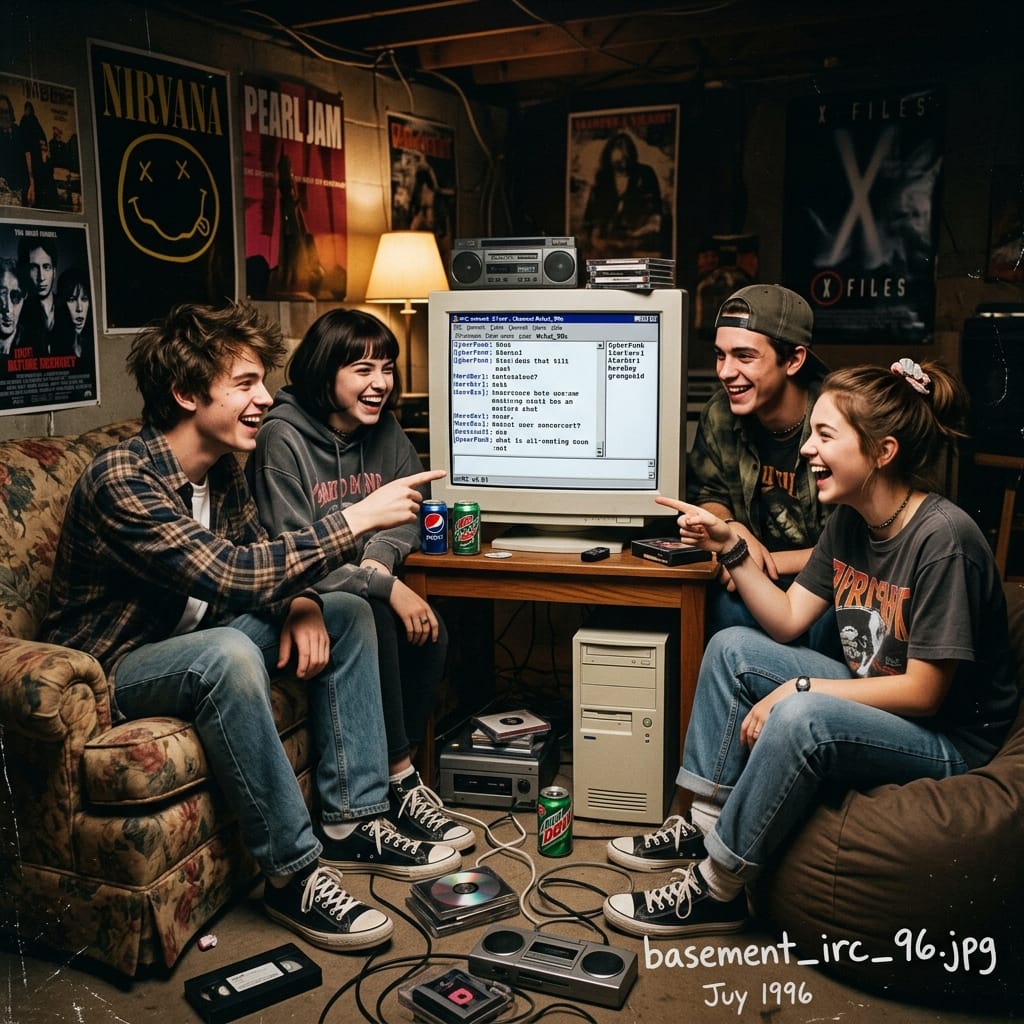
Friday night descends upon the room. You pop the top off a frosty beverage. You settle into the Game of Thrones, and the world outside is a cacophony of social media notifications and character limits. Facebook feels cluttered and noisy. Twitter is a cage of brevity and algorithms. Discord lacks the old-school charm of the raw web. You long for the nostalgic authenticity of simple text. You want to connect with the world on your own terms. This is the magical realm of IRC. It is Internet Relay Chat. Some call it mIRC. It is the artisanal marmalade of cyberspace. It tastes like childhood summers. It is familiar. It is exciting. It represents everything retro-tech enthusiasts love about the early internet. It is about intimacy. It is about simplicity. It is about freedom. It is the original “party line.”
I remember setting up our chat rooms at World of Chat. I considered building an IRC server for our community. I decided against it in the end. I still mention IRC on our
Chat Room History page. It is a protocol that enables real-time text messaging between computers. It sets itself apart from other protocols by its message-based nature. It was created in 1988. It remains a popular method for sending a text message on the internet. It is used for group discussions in channels. It allows for private messages and data transfer. It is a world of server-side and client-side commands. Until now, we have been conversing on platforms designed by others for us. Now see what happens when we take back control. Welcome to IRC chat.
I remember when I first set up our chat rooms at World of Chat, I was considering making an IRC server and making a chat using this, but decided against it in the end. I also mention IRC chat on the chat room history page.
The History and Evolution of the 1988 Genesis
The story of this chat system begins in Finland. It was the summer of 1988. Jarkko Oikarinen worked at the University of Oulu. He was a student and a researcher. He wanted to improve a program called MUT (MultiUser Talk). He wanted a way to allow people to chat in real-time across a network. He wrote the first IRC server software. He wrote the first IRC client software. He wanted a system that allowed for communication across a network in real-time. This was not a simple task in the 1980s. Jarkko Oikarinen had to create a protocol that could handle multiple users across different servers simultaneously.
He succeeded in August of 1988. The IRC server software spread quickly. It moved from the University of Oulu to other institutions in Finland. Then it moved across the world. By 1989, there were IRC servers across the globe. This was a multiuser talk system that felt like the future. It was a chat system built on text. It was a form of communication that changed everything. Jarkko Oikarinen changed how we talk online. He did it from a small lab in Finland. The growth of the network was organic. It was driven by the users themselves. They saw the value in a decentralised chat system.
As the protocol grew, different IRC networks formed. Each network had its own culture and rules. EFNet was the original network. It was the largest for many years. It was a place of raw communication. There were no central services. If you lost your nickname, it was gone. Then came Undernet. It was created to solve the problem of netsplits. A netsplit occurs when the connection between two servers is lost. The network splits into two. Undernet introduced better ways to handle these events. It made the chat system more stable for everyone.
Then came Dalnet. It was created to provide better services to the users. It introduced NickServ and ChanServ. These were automated programs that allowed users to register their nicknames. They allowed people to own their channels. This was a major shift in the IRC world. It brought order to the chaos. It allowed for the creation of stable communities. Dalnet became a primary point of attraction for many people. It was a place where your identity was protected by software.
The Anatomy of the Network: Servers, Channels, and Bots
To enter this world, you need a program. This is the client. You install the client on your computer. You choose a nickname. This nickname is your identity. You connect your client to an IRC server. You are now part of a network. The client handles the communication between you and the server. It sends your messages. It receives messages from others. It translates the protocol into a readable format. Without a good client, the experience is difficult.
The network is a vast place. It is filled with channels. A channel is a virtual room. Each channel has a specific name. Most channel names start with a # character. You join a channel to talk to people who share your interests. You can join a channel about music. You can join a channel about sports. You can join a channel about software development. The list of channels on a large network is endless. You can find a place for almost any topic.
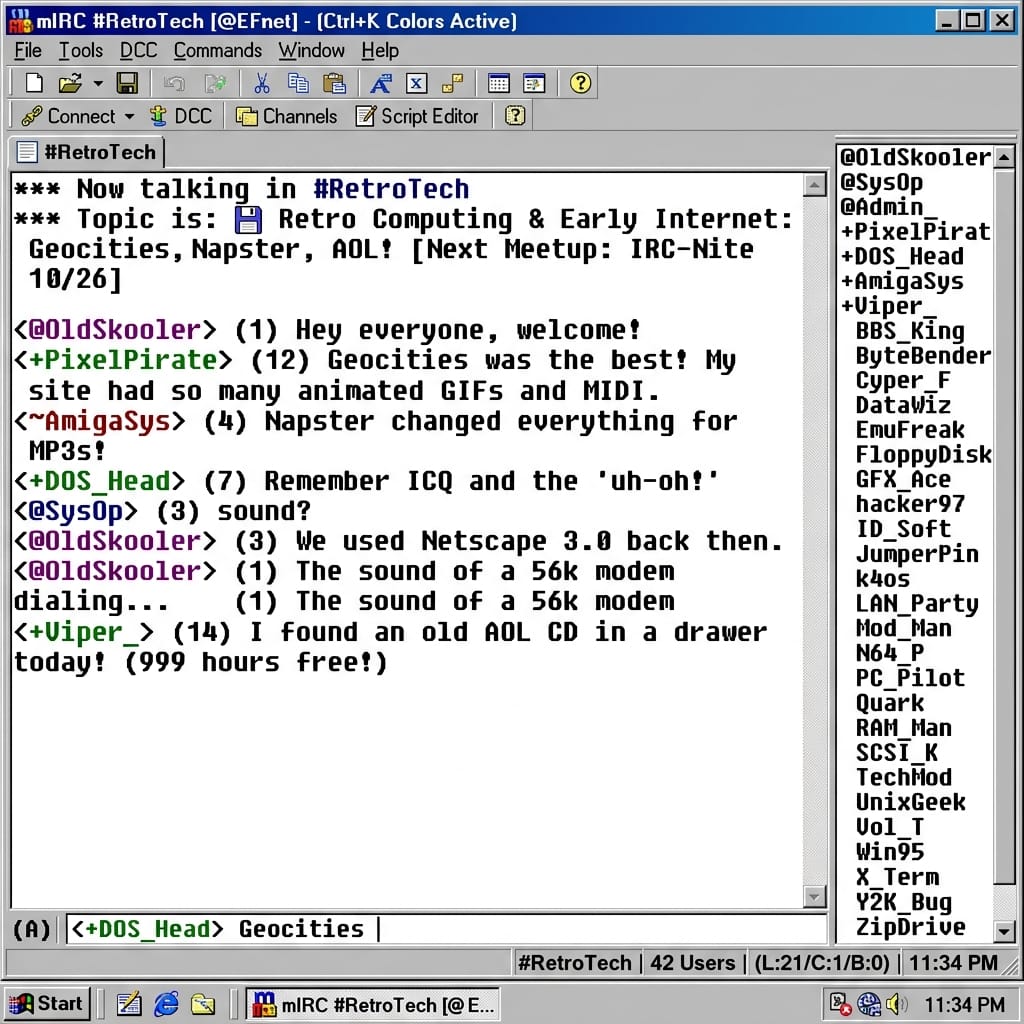
Inside a channel, there are rules. These rules are enforced by operators. An operator is a user with special powers. They have a @ symbol next to their nickname in the user list. They can kick you out of the room. They can ban you from returning. They manage the mode of the channel. They ensure the conversation remains civil. They use commands to maintain order. They are the guardians of the community. In some channels, there are also voiced users. They have a + symbol. They can talk even when the channel is moderated.
There are also bots. A bot is an autonomous script. It lives on the server. It performs various tasks based on user input. It can provide channel moderation. It can monitor conversations for specific keywords. It can give weather forecasts. It can give news updates. It can track stock prices. Bots are a key part of the IRC experience. They make the chat system feel alive and interactive. They are built using the protocol’s script language. They are a testament to the flexibility of the system.
Understanding the Role of Scripts
The ability to script actions is what sets IRC apart. A script is a series of commands that the client executes automatically. Power users use scripts to customise their experience. They can create custom menus. They can automate complex tasks. They can build their own bots. This level of customisation is unparalleled. It allows the user to tailor the environment to their exact needs. It is a way to turn a simple text-based chat into a powerful tool for productivity or entertainment.

Choosing Your Weapon: A Deep Dive into IRC Clients
You need the right software to join the conversation. These programs are your window into the network. mIRC is the most famous client in history. It was created by Khaled Mardam-Bey. It is a program for Windows. It has a loyal following of power users. It allows for deep script customisation. You can write a script to automate almost any task. You can change the theme of the interface. It includes DCC file transfer capabilities. It is a robust and powerful tool. It has been in continuous development for decades.
HexChat is a great example of an open-source client. It is free to use. It works on many different operating systems, including Linux and macOS. It is simple to set up. It is fast. It provides a clean and modern interface. It supports many of the features that power users expect, such as multi-server support and SASL authentication. It is a reliable choice for beginners and experts alike. It is a testament to the enduring nature of the protocol. It is built on the foundation of the old XChat client.
Mobile Connectivity and Web Clients
For those who need to stay connected on the move, IRCCloud is a modern example of how the protocol has evolved. It is a cloud-based client. It stays connected to the network even when you are offline. It syncs your messages across your phone and your computer. It provides push notifications for highlights and private messages. It is a way to ensure you never miss a part of the conversation. It handles the complexities of bouncers and persistent connections for you.
If you love the command line, there is Irssi. It is a terminal-based client. It is for those who want absolute control over their environment. It is a way to use IRC without ever touching a mouse. It is highly extensible. It is the choice of many professional developers and system administrators. It is a tool for those who appreciate the beauty of raw text. It is often run inside a tmux or screen session on a remote server. This allows the user to stay connected 24/7 and access their chat from any computer in the world.
The Command Line: Mastering the Syntax of Sovereignty
IRC is a world of commands. You do not click buttons to perform actions. You type commands into the input box. Every action starts with a forward slash. This tells the client that the text is a command for the server, not a message for the channel.
/Server [address]connects you to a network./Join #channelputs you in a room./Nick [name]changes your nickname instantly./Msg [nickname] [message]sends a private message to another person./Whois [nickname]gives you detailed information about a user./Listshows you a searchable list of every channel on the network.
This syntax is the language of the protocol. It is efficient. It is fast. It is a way to communicate without the lag of heavy graphical interfaces. You send a command. The server processes it. The network delivers the result. This is real-time communication at its purest. It requires a small amount of learning, but it rewards the user with absolute control. You are not at the mercy of a UI designer. You are the master of your own communication. It is a skill that translates well to other areas of computing.
You can also use the /Me command. This allows you to describe an action in the third person. It adds a human touch to the text. It makes the conversation feel more like a physical place. It is a way to express emotion and personality. It is a way to stand out in a sea of scrolling text. These commands are the building blocks of the IRC experience. They allow for a level of customisation that modern apps cannot match. They are the heartbeat of the protocol.
Global Networks and the Security of the Protocol
Today, there are still many active IRC networks. Each serves a different audience. Libera. Chat is currently the most important network for tech enthusiasts. It is where the world’s most vital open-source projects live. It is a place for deep software discussions. It is a place for peer-to-peer learning. If you have a technical question, Libera.Chat is the place to be. It is a network built for the community. It is the successor to the old Freenode network.
If you are looking for a more social place to chat, you might find what you need in

UK Local Chat Rooms. These networks are where people gather to share interests without the limits of character counts or algorithms. They are a place to meet strangers who become friends. They are a way to form long-lasting bonds across geographical boundaries. The protocol makes this possible. It bridges the gap between people. It fosters a sense of global citizenship.
Advanced Security: Bouncers and Cloaks
One of the most powerful tools in the IRC arsenal is the bouncer, or ZNC. A bouncer is a persistent proxy that lives on a remote server. It stays connected to the IRC network 24/7. When you connect your client to the bouncer, it replays any messages you missed while you were away. It also hides your real IP address, adding a layer of security. It allows you to maintain multiple connections to different networks through a single entry point. It is the ultimate tool for the serious IRC user.
The IRC protocol has some challenges. It was designed in a different era. By default, it uses plain text for all communication. This means your messages are not encrypted. Anyone with access to the network infrastructure can potentially read what you are saying. This is a significant security concern in the modern world. You must take steps to protect yourself. You should always use servers that support SSL/TLS encryption. This creates a secure connection between your client and the server. It hides your text from prying eyes.
Many modern networks require SSL for all users. You should also use a cloak if the network offers one. A cloak is a way to hide your IP address from other users in a channel. It keeps your physical location private. It is a crucial part of maintaining your anonymity. Security on IRC is a shared responsibility. You must be proactive in protecting your data and your identity.
The Future of Text in a Centralised World
Some argue that modern platforms like Slack and Discord have made IRC obsolete. These apps offer rich features like voice chat and video calls. They provide a more user-friendly interface. However, they are centralised platforms. They are owned by large corporations. They track your data. They show you advertisements. They control the environment you inhabit. They decide which features you get and which ones they take away. They can delete your account or your entire server at any time without warning.
IRC is different. It is a decentralised protocol. It is owned by the people who run the servers. It is a chat system built for the users. It does not have algorithms designed to keep you addicted. It does not have profile metrics that measure your worth. It is about the words you send. It is about the connections you make. It is a place of freedom and privacy. It is a place where you are in command of your own experience. It is a remnant of the open web that we must fight to preserve. It is a bastion of free speech and open communication.
The protocol continues to evolve. Modern clients are adding new features to adapt to contemporary requirements. They are adding support for modern encryption standards. They are improving the user interface while maintaining the core functionality. The top 100 IRC networks still hold over half a million users at any given time. This suggests that the protocol is far from dead. It remains a vital tool for niche communities, tech enthusiasts, and those who value their digital sovereignty and privacy.
This does not really compare to new chat software like Cody Chat, but they are set up in a totally different way. IRC, I thought, was dead, but it is still very much alive and kicking, with many of the new sites using more user interface-friendly software, like chat avenues site and up until recently chatiws site.
Joining the Original Internet Party Line
IRC chat offers a multitude of advantages. It is fast. It is efficient. It is accessible. It provides a sense of community that is hard to find elsewhere. It allows for real-time collaboration and brainstorming. It is a powerful tool for business and professional settings. It is a place where you can be yourself. It is a place where you can find your tribe. It is a place where you can learn and grow in a global environment.
If you are ready to explore the magical realm of IRC, join us in the
Main Chat Room. Choose your nickname. Connect to a server. Join a channel. Drop a message. You are now part of a history that started in Finland in 1988. You are part of the original internet “party line.” You are part of a global conversation that never sleeps. You are part of the future of text. Welcome to the world of IRC. It is waiting for you to make your mark. It is waiting for your voice to join the chorus of the open web.